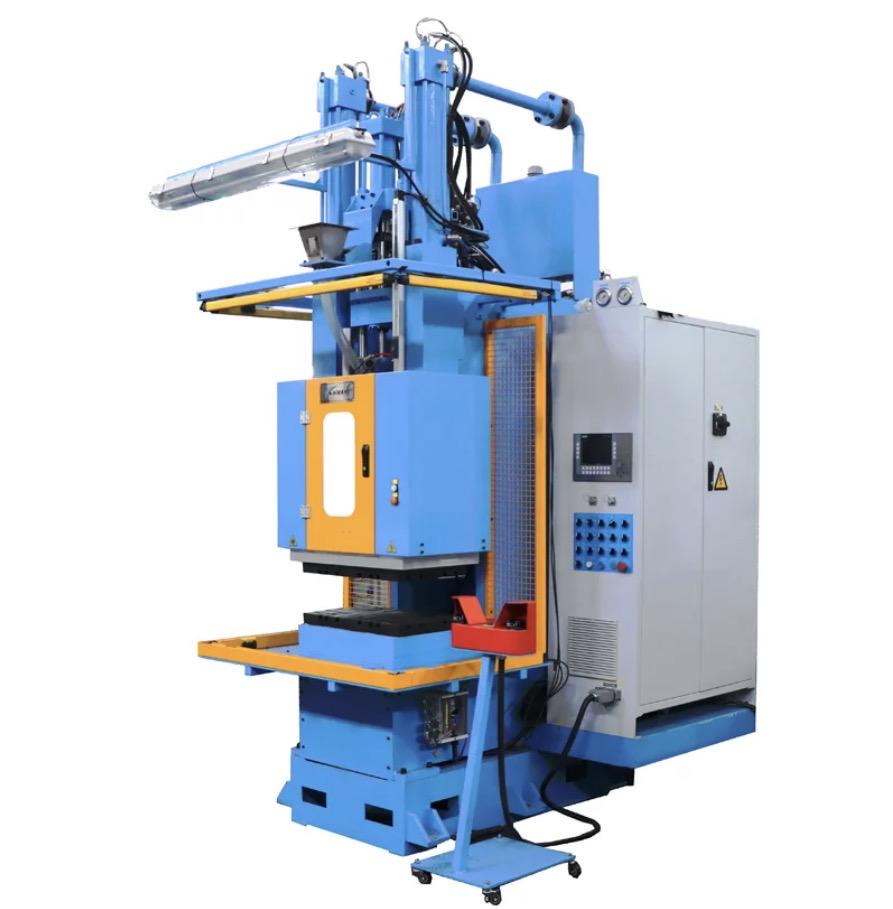
Manufacturing precision elastomer components involves navigating complex operational demands, ranging from balancing high output volumes and consistent structural integrity across every production batch. C frame rubber molding systems cover two primary configurations: rubber injection molding variants and hydraulic press units, each suited for distinct part designs and process workflows. Plant engineers and facility directors frequently evaluate how machinery footprint and frame geometry influence operator ergonomics, cycle times, and overall shop floor efficiency.
When fabricating specialized molded goods, a common inquiry among production teams is how compact molding systems maintain rigorous dimensional tolerances while supporting rapid tool changes and seamless automated integration. Addressing these operational challenges requires examining the structural mechanics, hydraulic responsiveness, and thermal management capabilities of modern processing equipment.
HWAYI’s CE-certified compact molding systems adopt field-verified structural designs. Such engineering approaches help manufacturers adapt to shifting production requirements and sustain consistent quality during round-the-clock operation.
Compact and adaptable frame structures have become increasingly popular in modern smart factories, as they can help save workshop floor space, simplify equipment layout planning, and allow manufacturers to flexibly adjust production lines for diverse small-batch and customized molding projects.
Structural Advantages of a C Frame Rubber Injection Molding Machine
The fabrication of rubber and silicone components demands robust mechanical support to withstand high clamping pressures without structural deflection or alignment issues.
Historically, traditional four-column presses were widely used across various sectors, yet modern production facilities are leaning toward open-frame designs for improved accessibility and simpler workflow integration. Production supervisors frequently inquire about how a well-designed C frame rubber injection molding machine enhances operator safety and simplifies manual or automated mold loading procedures.
By utilizing an open-access three-sided architecture, machinery designers facilitate easier part retrieval, faster mold swaps, and smoother integration with auxiliary handling equipment. Plant engineers often ask how these configurations handle complex multi-cavity tooling during rapid product transitions.
Furthermore, modern equipment minimizes mechanical stress across moving components, reducing baseline maintenance requirements and supporting continuous, high-volume production schedules. Well-engineered C-frame units help deliver uniform clamping force distribution, which can cut flash formation and lower post-processing labor costs across demanding manufacturing environments while keeping operational expenses well-controlled.
Engineering Precision of Modern C-Frame Hydraulic Press Systems
Consistent, efficient molding output relies on the equipment’s rigid frame construction and accurate hydraulic actuation. A high-performance C frame hydraulic press machine integrates advanced servo-driven hydraulic circuits and closed-loop control architectures that reduce unnecessary energy fluctuations.
When the equipment transitions between clamping, injection, and curing stages, intelligent power distribution networks adjust motor speeds dynamically to match immediate load demands.
Furthermore, intelligent diagnostic monitoring systems track hydraulic pressure and temperature variables in real time, alerting operators to minor deviations before they impact final part quality. This precise coordination helps limit flash formation and reduce material scrap rates, translating into meaningful cost savings over thousands of operational cycles. Additionally, uniform barrel and platen temperature distribution can support consistent vulcanization of elastomeric compounds inside each cavity, lowering risks of localized weak spots or internal stress concentrations.
Advanced thermal insulation barriers further protect heating elements from ambient heat loss, maintaining stable operating temperatures even during demanding, long-duration manufacturing runs. Such thermal design improvements can support better repeatability and tighter dimensional control for intricate elastomer parts, helping equipment deliver dependable performance under rigorous industrial use.
Real-World Application Scenarios Across Key Industries
Manufacturing requirements vary significantly depending on the specific industrial sector, part geometry, and material specifications involved. In the automotive aftermarket, production lines frequently fabricate specialized components such as sealing strips, dust boots, door seals, and O-rings. These items require strong tear resistance, tight dimensional tolerances, and steady elasticity to withstand harsh environmental conditions under the hood or along vehicle body panels.
Utilizing an advanced C frame rubber injection molding machine allows automotive suppliers to maintain rapid cycle times while working to lower unit production costs.
Furthermore, integrating automated feeding systems with these flexible platforms helps reduce manual handling errors and lift overall workplace safety standards. Similarly, the power sector relies heavily on robust electrical components, including insulators, lightning arresters, hollow bushings, and T-type connectors.
These large-scale parts require extended vulcanization phases where thermal stability and precise clamping force are paramount. By deploying a reliable C frame hydraulic press machine, power equipment manufacturers can optimize thermal management and pursue reliable, defect-free production runs that satisfy rigorous industry regulations and corporate sustainability targets.
Customization and Long-Term Technical Support
Factories differ widely in layout, energy budgets and supply-chain arrangements, so generic ready-made machinery may fail to match site-specific performance targets. As teams source new processing equipment, they prioritize compatibility with custom mold setups and access to robust technical support.
Tailored equipment design—accounting for specific cavity layouts, material viscosity profiles, and clamping tonnage requirements—helps the entire production ecosystem function harmoniously. Beyond initial machine delivery, ongoing technical guidance and professional after-sales maintenance provided by HWAYI play critical roles in sustaining high operational efficiency over years of continuous plant use.
Regular calibration of pressure transducers, inspection of hydraulic valves, and preventive maintenance help stop minor mechanical wear from growing into costly downtime.
Moreover, structured operator training programs help facility teams make better use of equipment uptime and adjust more readily to changing product specifications. Close cooperation with qualified suppliers enables industrial operators to access full turnkey support, covering early mold optimization, hands-on training and ongoing technical consultation.
Through these holistic strategies, modern manufacturing plants may balance economic profitability and operational excellence in their daily elastomer processing workflows.