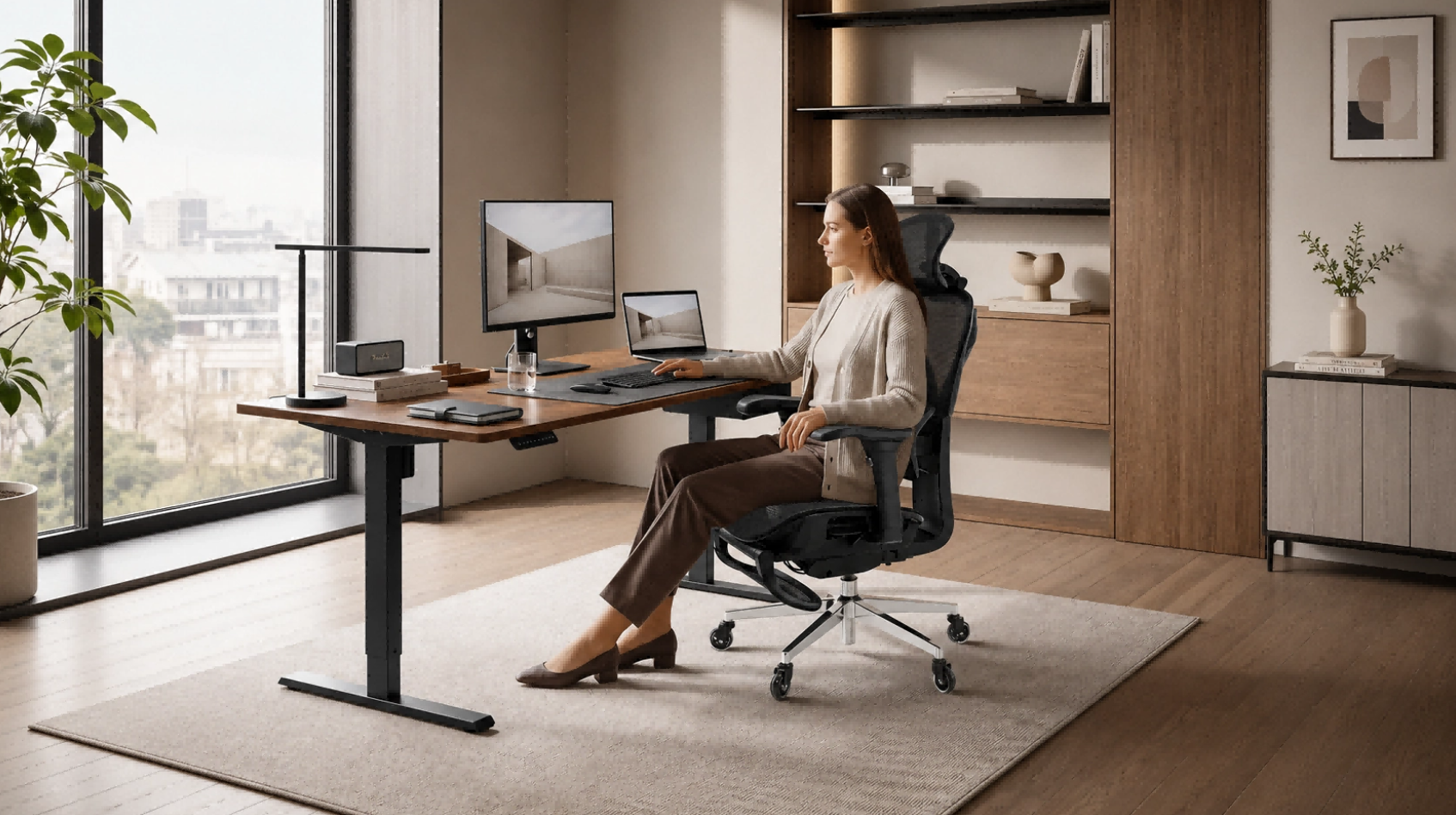
Procuring commercial office furniture demands a delicate balance of physical support, visual appeal, and wholesale cost. Corporate buyers increasingly expect seating that promotes workplace wellness while seamlessly matching contemporary interior aesthetics. For retail distributors, stocking products that meet these dual expectations without shrinking profit margins remains a remarkably complex challenge. Businesses must develop precise, data-backed procurement strategies to build highly competitive and financially viable seating catalogs.
Balancing these competing elements requires an analytical approach to active inventory selection. Over-investing in premium features can quickly price a retailer out of lucrative mid-tier markets. Conversely, focusing solely on low-cost, rigid models often leads to dissatisfied corporate clients and elevated return rates. Navigating this spectrum successfully allows distributors to capture a much broader share of commercial fit-out contracts and sustain healthier revenue streams across seasons.
Assessing Essential Ergonomic Features
When constructing a seating portfolio, buyers should distinguish clearly between mandatory support structures and premium add-ons. Essential functions like adjustable seat height, basic lumbar support, and breathable mesh backrests represent the accepted baseline for modern corporate expectations. These critical features directly influence daily physical comfort for employees. Retailers can reliably stock these core baseline models to fulfill standard bulk procurement requests from large organizational clients.
Advanced mechanisms, such as synchronized tilt functions, seat depth sliders, or multi-directional armrests, cater to specialized corporate roles requiring prolonged desk work. Incorporating these higher-tier options provides retailers with structured opportunities for valuable upselling. Distinguishing between foundational physical support and advanced granular adjustability helps purchasing managers allocate their wholesale budgets much more effectively across different commercial pricing tiers.
Integrating Design into an Office Chair Buying Guide
Aesthetic alignment plays a substantial role in securing modern commercial interior design bids. Technology startups often favor sleek, minimalist frames, while traditional financial firms may prefer the visual authority of upholstered synthetic leather. Structuring procurement around a comprehensive office chair buying guide helps businesses categorize products accurately by visual style. This methodology simplifies the product selection process for B2B sales teams pitching to diverse clients.
Providing visual variety within a single ergonomic framework can prove highly advantageous for inventory management. Procurement teams can actively source chair series offering multiple color palettes or distinct material finishes while utilizing the exact same underlying structural base. This sourcing strategy allows distributors to meet diverse architectural requirements while keeping warehouse operations and replacement part tracking remarkably simple.
Navigating Price Points and Profit Margins
Cost considerations remain absolutely central to formulating any viable wholesale strategy. Buyers must look beyond the initial factory unit price and carefully calculate the total landed cost, including freight volume and overall packaging efficiency. Chairs engineered with compact flat-pack designs consume significantly less space within overseas shipping containers. This spatial efficiency can drastically lower transit costs, giving retailers greater pricing flexibility.
To maintain strong retail margins, businesses should seek seating models that deliver high perceived value through durable materials rather than overly complex, fragile mechanisms. Heavy-duty nylon bases and reliable pneumatic cylinders add significant operational longevity to a product without drastically inflating base production costs. Supplying structurally durable, competitively priced seating helps distributors build genuine trust with corporate procurement officers.
The Role of a Versatile Office Chair Supplier
Achieving consistent product balance requires close collaboration with a highly capable office chair supplier. A reliable factory manufacturing partner should enforce strict quality control measures across completely different price tiers, from entry-level task chairs to premium executive models. Consistent manufacturing standards help retailers significantly minimize post-purchase structural complaints. Evaluating a supplier’s production consistency is vital for protecting a commercial brand’s reputation.
Operational scalability serves as another critical procurement factor. Suppliers operating extensive manufacturing production lines can generally adapt faster to unexpected purchasing volume spikes during peak corporate renovation seasons. This crucial manufacturing elasticity helps regional retail distributors prevent costly out-of-stock scenarios. Partnering with a robust, scalable supply network provides businesses with the logistical stability needed to confidently pursue large-scale B2B contracts.
Evaluating SONGMICS HOME B2B Capabilities
When analyzing global supply chains, wholesale businesses may thoroughly review the infrastructure of established international manufacturers. SONGMICS HOME operates as a comprehensive B2B furniture manufacturer offering a wide range of commercial workspace solutions. Their product catalog encompasses diverse seating options that blend functional adjustability with contemporary design. This structural variety enables retail buyers to source highly balanced product mixes.
To actively facilitate international B2B distribution, they manage an extensive system of self-owned logistics facilities spanning several major global markets. This localized warehousing capability is deliberately structured to support efficient order fulfillment for overseas wholesale buyers. Retailers might find this specific logistical infrastructure advantageous when attempting to stabilize inbound freight schedules and effectively mitigate unpredictable regional ocean shipping delays.
Additionally, their internal engineering teams are available to fully support Original Equipment Manufacturer collaborations. This service allows wholesale clients to customize specific ergonomic features, unique surface materials, or exact packaging dimensions. Tailoring commercial seating solutions to distinct regional aesthetic preferences empowers retailers to actively differentiate their catalogs. This manufacturing flexibility may help businesses align their offerings closely with target demographics.
Building a Resilient Commercial Strategy
Strategic procurement directly dictates a retail organization’s capacity to serve highly diverse corporate clients. By carefully weighing physical support mechanisms against aesthetic appeal and calculated landed costs, merchandising departments can construct highly effective B2B product portfolios. This data-driven, balanced approach to inventory planning prevents working capital from becoming trapped in over-engineered or poorly designed commercial seating stock.
Establishing a highly resilient commercial seating catalog requires continuous market analysis and the cultivation of strong global supplier relationships. Distributors who prioritize versatile, well-constructed workspace furniture can adapt much more fluidly to rapidly changing workplace dynamics. Supplying reliable, balanced seating solutions positions a B2B business as a trusted resource for enterprise clients, paving a clear pathway for sustained revenue generation.