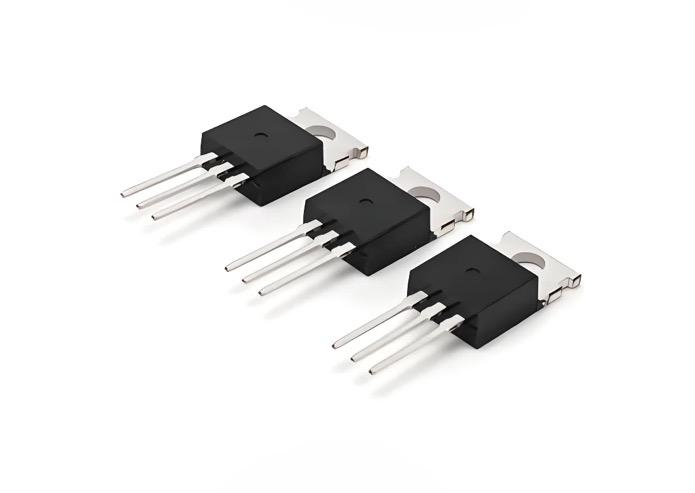
Industrial automation relies heavily on precise control, real-time data processing, and unwavering system reliability. As factories transition toward smart manufacturing and Industry 4.0 paradigms, engineers face increasing pressure to select robust embedded hardware that can withstand harsh operating environments. Among semiconductor solutions, STMicroelectronics microcontrollers have emerged as foundational building blocks for modern industrial control equipment, ranging from programmable logic controllers to high-speed robotic systems.
Understanding the Role of Advanced MCUs in Industrial Automation
Engineers often ask: How can industrial automation architectures maintain high computational efficiency while keeping power consumption and thermal dissipation manageable on the factory floor?
In practical application scenarios, industrial control units operate continuously under electrical noise, mechanical vibration, and wide temperature variations. Many STMicroelectronics STM32 microcontrollers use Arm Cortex-M cores and integrate peripherals for industrial control applications with capabilities varying by device family. These chips offer fast interrupt response times, advanced hardware timers for motor control, and robust communication interfaces such as CAN FD, SPI, and Ethernet. Such features allow engineers to build systems capable of precise motion control, sensor data fusion, and deterministic feedback loops.
Furthermore, supply chain stability remains a top priority for procurement teams managing industrial projects. When sourcing components, project managers frequently evaluate whether they can secure consistent supply streams without facing inflated spot-market pricing or unexpected allocation bottlenecks. This is where partnering with a specialized stmicroelectronics distributor becomes vital for mitigating logistical uncertainties and maintaining predictable build schedules.
Sourcing Strategies and Supply Chain Resilience
Navigating component availability for long-lifecycle industrial products requires careful planning. Many hardware designers encounter challenges when specific microcontroller variants experience unexpected allocation or regional shortages. To address these vulnerabilities, engineering and procurement departments often look toward a trusted independent partner that maintains diversified sourcing channels and deep industry expertise.
When evaluating component suppliers, industrial clients typically consider factors such as inventory depth, traceability, and logistics efficiency. Independent distributors with robust global networks help bridge the gap between manufacturer production cycles and urgent factory assembly schedules. For rapid prototyping or urgent replenishment, buyers should verify stock availability quantities, traceability records, and estimated delivery times before placing an order.
Collaborating with stmicroelectronics authorized distributors
Ensuring component authenticity is non-negotiable in industrial automation, where a single counterfeit or substandard chip can lead to catastrophic system failure. Procurement specialists frequently collaborate with established channels, including direct manufacturer relationships and stmicroelectronics authorized distributors, to help support component pedigree and quality compliance.
However, authorized networks alone sometimes face capacity constraints during peak industry demand cycles. To complement primary channels, many manufacturers also rely on professional stocking partners.
Companies like Mayhwa aggregate resources from thousands of global electronic component suppliers, bridging authorized channels and independent warehousing networks. By combining large-volume direct procurement with extensive inventory management across strategic hubs in Hong Kong and Shenzhen, they help clients navigate complex chip allocation phases.
Beyond basic stock availability, industrial buyers also value technical support and transparent lead-time forecasting. Working closely with an experienced STMicroelectronics distributor helps support engineering teams in receiving up-to-date lifecycle information, parametric cross-references, and guidance on product longevity commitments—such as STMicroelectronics’ multi-year availability programs that support industrial equipment for a decade or more.
Real-World Applications in Industrial Robotics and Smart Grids
To see these technologies in action, consider modern automated guided vehicles operating in automated warehouses. These mobile robots require dual-core microcontrollers to handle concurrent tasks: real-time navigation algorithms and safety-critical motor control. STMicroelectronics microcontrollers provide the necessary computational headroom and functional safety mechanisms to meet these stringent requirements.
Similarly, in smart grid infrastructure and solar inverter systems, microcontrollers manage fast power conversion stages. Depending on the device, integrated ADCs and comparators can support digital power control and grid synchronization when combined with suitable control algorithms and power-stage designs.
Procurement professionals managing such complex deployments understand that component lifecycle planning is just as important as silicon performance. Whether collaborating directly with STMicroelectronics authorized distributors or utilizing independent supply chain networks, maintaining a flexible sourcing strategy helps keep manufacturing schedules from being disrupted.
Company Profile and Industry Support
To understand how global procurement services support these technological needs, it helps to look at industry infrastructure. Founded as a fast-growing independent electronic component distributor headquartered in Hong Kong, Mayhwa has committed to providing comprehensive global procurement and supply chain solutions for worldwide electronics manufacturing clients. They have aggregated resources from over 2,000 global suppliers and source large volumes of inventory directly from manufacturers as well as authorized channels like Avnet, Arrow, Future, and WPG.
Mayhwa supports electronic component sourcing for industrial automation and other applications, subject to component availability and the requirements of each order.
Ultimately, successful industrial automation depends on the synergy between advanced silicon capabilities and resilient supply chain execution. By selecting microcontrollers that meet system requirements and evaluating distribution partners carefully, industrial equipment manufacturers can better manage technical and supply chain risks as production scales.