Grid codes vary significantly across regions—from Europe’s VDE-AR-N 4105 to North America’s IEEE 1547 and Australia’s AS 4777. For commercial installers and project developers, deploying a string inverter that fails to meet local compliance can result in rejected interconnection applications, costly retrofits, and project delays. Understanding the technical requirements behind voltage ride-through, frequency response, and anti-islanding protection is essential. A compliant PV string inverter does more than convert DC to AC—it actively communicates with the grid, stabilizing voltage and maintaining power quality under fault conditions.
Key Grid Code Parameters Every Inverter Must Meet
Modern grid codes demand that PV string inverter systems respond dynamically to disturbances. Low-voltage ride-through (LVRT) requires the inverter to remain online during voltage dips, injecting reactive current to support grid recovery. Frequency-watt and volt-var functions allow the string inverter to curtail real power or absorb reactive power when grid limits are exceeded. Additionally, anti-islanding detection—often fulfilled by passive and active methods—must disconnect within two seconds to protect utility workers. Non-compliant units risk automatic disconnection and regulatory fines.
Why Wide Operating Ranges Simplify Compliance
A PV string inverter with broad electrical parameters naturally meets multiple regional standards without hardware changes. Models featuring a 160–1000V wide MPPT voltage range can handle varied string configurations and low-light morning conditions, powering earlier and generating longer. A 1100V maximum input and 16A single string input current support high-power modules, increasing panel availability across project types. These specifications not only boost energy harvest but also align with grid codes that demand stable operation across fluctuating solar conditions.
Safety Integration: AFCI as a Non-Negotiable Feature
Arc faults pose serious fire risks in PV systems, and many national codes now require arc fault circuit interruption (AFCI). A compliant PV string inverter should include AFCI 2.0—an effective solution that detects and eliminates arc faults, preventing sparks from becoming fires. This protection layer is increasingly mandatory for rooftop installations and adds to overall system bankability.
Sungrow: Compliance Built Into Every Unit
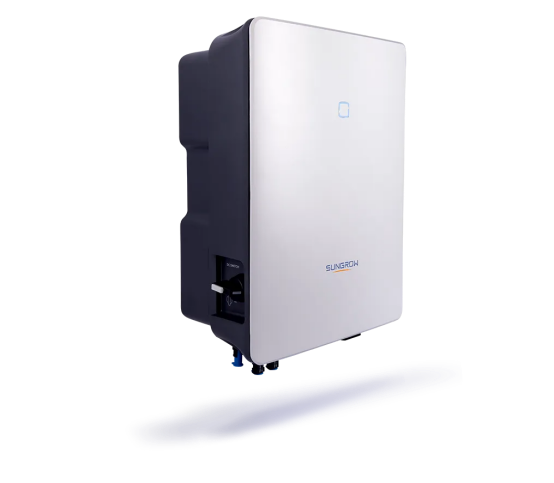
Sungrow addresses global grid code complexity with its 5–12kW SG5/6/7/8/10/12RT-P2 three-phase string inverter series. Powered by advanced technologies, these inverters achieve leading efficiency and extended operation hours, capturing more solar energy across diverse environments. The wide 160–1000V MPPT range and 1100V maximum input enable seamless adaptation to regional requirements. Equipped with AFCI 2.0, the PV string inverter delivers unmatched safety alongside full compliance. For B2B buyers seeking a single inverter platform that navigates multiple grid codes reliably, Sungrow provides a future-proof, innovation-driven answer.